By signing in you confirm you are 18 or older, or have your parent’s or guardian’s consent.

CA Foundation September 2026 Economics Question Paper with Solutions

  • ₹0 · All free
  • 100 Q · 100 marks · 2h
  • −¼ per wrong answer
Start free mock

Timed, marked like the real paper. Sign in with Google to start.

By signing in you confirm you are 18 or older, or have your parent’s or guardian’s consent.

← All CA Foundation September 2026 papers

Every answer and solution is shown below. For a real mock, take the timed test first, then come back to read the solutions.

Questions.

Q1

The demand curve as shown in the diagram below, is indicative of which of the following numerical value of elasticity of demand?
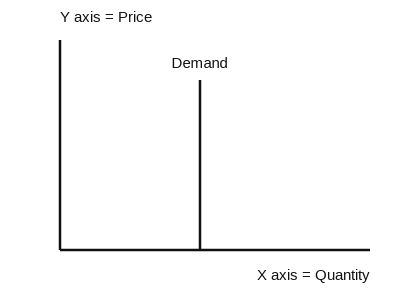
A vertical demand curve: price on the Y axis, quantity on the X axis

  1. (a) Ep=0E_p = 0
  2. (b) Ep=InfinityE_p = \text{Infinity}
  3. (c) Ep=1E_p = 1
  4. (d) Ep>1E_p > 1
Answer and solution
Q2

A consumer buys 120 units of a commodity at ₹10 per unit. If the price elasticity of demand is 1.25, how many units will he buy at ₹15 per unit of the same commodity?

  1. (a) 45
  2. (b) 75
  3. (c) 55
  4. (d) 60
Answer and solution
Q3

When some people start investing money in share market then many other people start following those people without considering its advantages and disadvantages. This is the example of ________.

  1. (a) Snob effect
  2. (b) Veblen effect
  3. (c) Bandwagon effect
  4. (d) Marshal effect
Answer and solution
Q4

The total revenue, when price increases, in case of inelastic demand, will ________.

  1. (a) Increase
  2. (b) Decrease
  3. (c) Remain the same
  4. (d) Become zero
Answer and solution
Q5

In case of perfect elastic supply, the supply curve becomes horizontal. The elasticity of supply shall be __________.

  1. (a) Zero
  2. (b) Less than one
  3. (c) Equal to one
  4. (d) Infinite
Answer and solution
Q6

Which of the following is not a characteristic of labour, as a factor of production?

  1. (a) There is always rapid adjustment of supply of labour to the demand for it
  2. (b) Labour is mobile
  3. (c) Labour is perishable
  4. (d) All labour may not be productive
Answer and solution
Q7

Graphically, consumer surplus represents a ________ area below the demand curve and above the price line.

  1. (a) Rectangular
  2. (b) Triangular
  3. (c) Square
  4. (d) Oval
Answer and solution
Q8

Which of the following is not a characteristic of land as a factor of production?

  1. (a) Land is immobile
  2. (b) Land is homogeneous
  3. (c) Land is a passive factor
  4. (d) Supply of land is fixed
Answer and solution
Q9

Capital in the form of road and bridges etc. may be categorised into -

  1. (a) Circulating capital
  2. (b) Individual capital
  3. (c) Human capital
  4. (d) Social capital
Answer and solution

Passage · Q10 to Q11

On the basis of the following information answer Q. No. 10 and Q. No. 11:

No. of units Total Variable Cost (₹) Total Cost (₹)
0 0 2,000
1 250 2,250
2 480 2,480
3 720 2,720
4 1,000 3,000
5 1,250 3,250
Q10

From the above information, calculate the average fixed cost in case of the fifth unit of output?

  1. (a) ₹1000
  2. (b) ₹400
  3. (c) ₹2000
  4. (d) ₹500
Answer and solution
Q11

From the above information, calculate the marginal cost of the third unit of output.

  1. (a) ₹240
  2. (b) ₹250
  3. (c) ₹230
  4. (d) ₹280
Answer and solution
Q12

For any particular level of output, which of the following relationship holds true? (Σ\Sigma = Summation)

  1. (a) TR=ΣMRTR = \Sigma MR
  2. (b) MR=ΣTRMR = \Sigma TR
  3. (c) TR=ΣARTR = \Sigma AR
  4. (d) MR=ΣARMR = \Sigma AR
Answer and solution
Q13

In the context of changes in demand and supply, the supply curve shifting to the left indicates __________.

  1. (a) An increase in demand
  2. (b) An increase in supply
  3. (c) A decrease in demand
  4. (d) A decrease in supply
Answer and solution
Q14

The trade policies of the Government, which may limit the trading of a commodity within the country, is the feature associated with which type of markets

  1. (a) Local Markets
  2. (b) Regional Markets
  3. (c) National Markets
  4. (d) International Markets
Answer and solution
Q15

Under short run equilibrium of a competitive firm, where AR = ATC which of the following situation may arise?

  1. (a) The firm earns normal profits
  2. (b) The firm earns maximum profits
  3. (c) The firm earns super normal profits
  4. (d) The firm earns no profit no loss
Answer and solution
Q16

Which of the following expression depicts the relationship between Marginal Revenue (MR), Average Revenue (AR) and Price Elasticity of Demand (e)?

  1. (a) MR=AR×(e+1)/eMR = AR \times (e + 1)/e
  2. (b) AR=MR×(e+1)/eAR = MR \times (e + 1)/e
  3. (c) MR=AR×(e−1)/eMR = AR \times (e - 1)/e
  4. (d) MR=AR×e/(e−1)MR = AR \times e/(e - 1)
Answer and solution
Q17

Total revenue will be maximum where elasticity is equal to _____.

  1. (a) One
  2. (b) Zero
  3. (c) Infinity
  4. (d) Negative
Answer and solution
Q18

In which phase of business cycle, the actual demand stagnates. This is the end of expansion and it occurs when economic growth has reached a point where it will stabilise for a short time and then move in the reverse direction?

  1. (a) Expansion
  2. (b) Peak
  3. (c) Trough
  4. (d) Recovery
Answer and solution
Q19

Bilateral monopoly is a combination of which of the following two markets?

  1. (a) Monopoly and Monopsony
  2. (b) Monopoly and Oligopsony
  3. (c) Duopoly and Monopolistic competition
  4. (d) Perfect competition and Oligopsony
Answer and solution
Q20

Mobile telephones and internet service providers in India falls under which type of market classification?

  1. (a) Monopoly
  2. (b) Monopolistic competition
  3. (c) Oligopoly
  4. (d) Perfect competition
Answer and solution
Q21

Which of the following is not a feature of business cycles?

  1. (a) Business cycles do not exhibit the same regularity
  2. (b) Business cycles are caused by varying factors
  3. (c) The length of each business cycle phase is same
  4. (d) Business cycles have serious consequences on the well-being of the society
Answer and solution
Q22

Match the types of economic indicators in Column I with the most appropriate example in Column II:

Column I Column II
(1) Leading indicator (a) Unemployment, Corporate Profit etc.
(2) Lagging indicator (b) New orders for consumer goods and plant & equipment
(3) Coincident indicator (c) Gross Domestic Product (GDP)

Which of the following option is correct?

  1. (a) (1)-(b), (2)-(a), (3)-(c)
  2. (b) (1)-(a), (2)-(b), (3)-(c)
  3. (c) (1)-(c), (2)-(b), (3)-(a)
  4. (d) (1)-(b), (2)-(c), (3)-(a)
Answer and solution
Q23

Which institution is primarily responsible for compilation of National Accounts Statistics in India?

  1. (a) Reserve Bank of India (RBI)
  2. (b) NITI Aayog
  3. (c) Central Statistical Organisation (CSO) under MOSPI
  4. (d) Ministry of Finance
Answer and solution
Q24

National income or NNP at factor cost is equal to ______.

  1. (a) Sum of domestic factor incomes only
  2. (b) Sum of domestic factor incomes and net factor income from abroad
  3. (c) GDP at market prices plus indirect taxes
  4. (d) Gross national product at factor cost plus depreciation
Answer and solution
Q25

Match the method of national income measurement in Column I with what it primarily measures in Column II:

Column I Column II
(1) Value Added Method (Product Method) (a) It shows the unduplicated contribution by each industry to the total output
(2) Income Method (b) Aggregate final expenditure in an economy during an accounting year
(3) Income Disposal Approach (c) Sum of factor incomes paid out by all production units within the domestic territory of a country

Which of the following option is correct?

  1. (a) (1)-(a), (2)-(c), (3)-(b)
  2. (b) (1)-(b), (2)-(a), (3)-(c)
  3. (c) (1)-(c), (2)-(b), (3)-(a)
  4. (d) (1)-(a), (2)-(b), (3)-(c)
Answer and solution
Q26

Which one of the following correctly defines the Average Propensity to Consume (APC)?

  1. (a) APC=ΔC/ΔYAPC = \Delta C/\Delta Y
  2. (b) APC=C/YAPC = C/Y
  3. (c) APC=1−MPCAPC = 1 - MPC
  4. (d) APC=Y/CAPC = Y/C
Answer and solution
Q27

A deflationary or recessionary gap arises when

  1. (a) Aggregate demand at the full-employment level is greater than the output at full employment.
  2. (b) Aggregate demand for an amount of output is less than the full-employment level of output.
  3. (c) Equilibrium level of income exceeds the potential GDP.
  4. (d) Aggregate demand equals aggregate supply at full employment.
Answer and solution
Q28

An increase in investment by ₹150 Crores leads to increase in the national income by ₹600 Crores. What will be the value of marginal propensity to consume?

  1. (a) 0.15
  2. (b) 0.20
  3. (c) 0.25
  4. (d) 0.75
Answer and solution
Q29

With reference to Keynes Theory of Determination of National Income, consumption expenditure is determined by

  1. (a) Amount of wages, rent and interest
  2. (b) Disposable income
  3. (c) Amount of Investments
  4. (d) Government Taxes and Subsidies
Answer and solution
Q30

Match the constitutional provision in List I with the corresponding description in List II:

List I List II
(1) Article 246 (a) It provides for an institutional mechanism mainly the finance commission to facilitate such transfers
(2) Articles 268-281 (b) It demarcates the powers of Union and States
(3) Article 280 (c) It provides constitutional provisions relating to distribution of finances among states

Select the correct option from the following:

  1. (a) (1)-(b), (2)-(c), (3)-(a)
  2. (b) (1)-(c), (2)-(b), (3)-(a)
  3. (c) (1)-(b), (2)-(a), (3)-(c)
  4. (d) (1)-(a), (2)-(c), (3)-(b)
Answer and solution
Q31

Consider the following statements about the redistribution function of the government:

  1. It is concerned with the question 'for whom' should an economy produce goods and services.
  2. It is implemented only through progressive taxation, and not through public expenditure.
  3. It aims at providing equality of income, wealth and opportunities.

Which of the above statements are correct?

  1. (a) 1 and 3 only
  2. (b) 1 and 2 only
  3. (c) 2 and 3 only
  4. (d) 1, 2 and 3
Answer and solution
Q32

Which of the following is not an objective of Fiscal Responsibility and Budget Management (FRBM) Act, 2003?

  1. (a) Inter-generational equity and fiscal management
  2. (b) Short run macroeconomic stability
  3. (c) Better coordination between fiscal and monetary policy
  4. (d) Transparency in fiscal operation of Government
Answer and solution
Q33

The Theory of Public Finance (1959) introduced by Richard Musgrave is concerned with the following functions of Government:

  1. (a) Resource allocation only
  2. (b) Income redistribution and macro-economic stabilisation both
  3. (c) Resource allocation and macro-economic stabilization both
  4. (d) Resource allocation, income redistribution and macro-economic stabilization
Answer and solution
Q34

The government budget of a country primarily serves which of the following purpose?

  1. (a) It is only a legal record of past year's actual receipts and expenditures
  2. (b) It is a policy instrument used to regulate and restructure a country's economic priorities
  3. (c) It is merely a compilation of tax proposals for the next financial year
  4. (d) It is a statement restricted to the receipts and expenditures of public sector enterprises only
Answer and solution
Q35

In an economy, the total number of transactions are 1,500 Crores (T), average price level (P) is ₹4 and money supply (M) is ₹1000 Crores. According to Fisher's equation. Calculate the transaction velocity of circulation of money (V).

  1. (a) 2
  2. (b) 4
  3. (c) 6
  4. (d) 8
Answer and solution
Q36

According to Tobin, holding a greater proportion of bonds and shares in a portfolio generally leads to

  1. (a) Lower return and lower risk
  2. (b) Higher return and higher risk
  3. (c) No return and no risk
  4. (d) Lower liquidity only
Answer and solution
Q37

Lower interest rates reduce the incentive for households to

  1. (a) Spend money
  2. (b) Borrow loans
  3. (c) Save money
  4. (d) Buy houses
Answer and solution
Q38

Mr. A keeps most of his money in savings deposits and withdraws small amounts of cash whenever needed for daily expenses. He does this, because bank deposits earn interest while cash does not. This situation is best explained in which of the following theory?

  1. (a) Baumol's inventory approach
  2. (b) Tobin's risk theory
  3. (c) Quantity theory of money
  4. (d) Fiscal deficit theory
Answer and solution
Q39

The equation M=m×MBM = m \times MB shows the relationship between which of the following?

  1. (a) Inflation and unemployment
  2. (b) Revenue and expenditure
  3. (c) Imports and exports
  4. (d) Reserve money and total money stock
Answer and solution
Q40

Which was the most controversial topic in Doha Agenda?

  1. (a) Intellectual property issues
  2. (b) Service sector issues
  3. (c) Agriculture trade
  4. (d) Non-agriculture trade
Answer and solution
Q41

An appreciation of currency raises the price of exports because of which

  1. (a) Imports decline and exports rise
  2. (b) Imports rise and exports fall
  3. (c) The quantity of exports will fall
  4. (d) Inflation increases rapidly
Answer and solution
Q42

Which one from following is not the guiding principle of WTO?

  1. (a) Special treatment
  2. (b) Transparency and binding
  3. (c) Encouraging development and economic reform
  4. (d) Promoting fair competition
Answer and solution
Q43

Which type of exchange rate describes 'how many' units of a good or service in one country can be traded for 'one' unit of that good or service in a foreign country?

  1. (a) Spot exchange rate
  2. (b) Real exchange rate
  3. (c) Nominal exchange rate
  4. (d) Effective exchange rate
Answer and solution
Q44

An Indian restaurant chain opening the same type of restaurant outlets in Canada is an example of

  1. (a) Horizontal direct investment
  2. (b) Vertical direct investment
  3. (c) Conglomerate foreign direct investment
  4. (d) Two-way direct foreign investment
Answer and solution
Q45

India faced an unusual challenging external environment following the Russia-Ukraine war due to which of the following factors?

  • I. Increased crude oil and commodity prices
  • II. Persistent global supply disruptions
  • III. Tighter financial conditions
  • IV. Release of inflationary pressures

Select the correct option from the following:

  1. (a) I, II and III
  2. (b) II and IV
  3. (c) I and IV
  4. (d) I, III and IV
Answer and solution
Q46

Which one of the following is not the key initiative of NITI Aayog?

  1. (a) E-Amrit
  2. (b) Methanol Economy Programme
  3. (c) Creation of start-up of Eco-system in agriculture and allied sector
  4. (d) Shoonya Compaign
Answer and solution
Q47

Which policy of the Government is introduced to facilitate data-based decisions related to integrated planning of multimodal infrastructure, thereby reducing logistics cost?

  1. (a) Udyami Bharat
  2. (b) Start-up India Programme
  3. (c) Industrial Corridor Development Programme
  4. (d) PM Gati Shakti National Master Plan
Answer and solution
Q48

Considering the Ad valorem tariff to be 15% on imported cars. What will be the increase in tariff when the price of the imported cars increases from ₹60 Lakhs to ₹90 Lakhs?

  1. (a) ₹3.00 Lakh
  2. (b) ₹1.50 Lakh
  3. (c) ₹6.00 Lakh
  4. (d) ₹4.50 Lakh
Answer and solution

Passage · Q49 to Q51

Use the following information to answer Q. No. 49, Q. No. 50 and Q. No. 51:

Particulars ₹
Currency with public 10,000
Coins with public 10
(Current and Savings) Demand deposits with the banking system 5,000
Time deposits with the banking system 7,000
Other deposits with RBI 440
Total deposit with Post Office savings organization (Excluding National Savings Certificates) 4,450
Q49

What is the correct value of M3?

  1. (a) ₹20,440
  2. (b) ₹16,700
  3. (c) ₹27,440
  4. (d) ₹22,450
Answer and solution
Q50

What is correct value of M1M_1?

  1. (a) ₹15,450
  2. (b) ₹15,440
  3. (c) ₹22,440
  4. (d) ₹16,700
Answer and solution
Q51

What is the correct value of M4?

  1. (a) ₹26,500
  2. (b) ₹15,710
  3. (c) ₹26,900
  4. (d) ₹20,710
Answer and solution
Q52

A commercial bank has Net Demand and Time Liabilities (NDTL) of ₹1,800 Crores. The Reserve Bank of India raises the Cash Reserve Ratio (CRR) from 3% to 4.5%. What is the additional amount, the bank must mandatorily maintain with RBI?

  1. (a) ₹54 Crores
  2. (b) ₹81 Crores
  3. (c) ₹18 Crores
  4. (d) ₹27 Crores
Answer and solution
Q53

Ideally, a society would not like to utilise all of its scare resources for the current consumption only but the future production should also be considered. This concept, where the society has to decide how much savings and how much investments has to be considered for the future progress, is primarily linked with which of the following central economic problem?

  1. (a) What provisions (if any) are to be made for economic growth
  2. (b) For whom to produce
  3. (c) What to produce
  4. (d) How to produce
Answer and solution
Q54

Which of the following is not a major macroeconomic factor?

  1. (a) Stage of business cycle
  2. (b) Market structure and pricing policy
  3. (c) Social and political environment
  4. (d) The type of economic system
Answer and solution
Q55

Absence of Government interference, is a feature of which form of economy?

  1. (a) Mixed economy
  2. (b) Capitalist economy
  3. (c) Socialist economy
  4. (d) Centrally planned economy
Answer and solution
Q56

Which of the categories of business issues can be solved with the application of Micro Economics Theories?

  1. (a) Internal or environmental issues
  2. (b) External or environmental issues
  3. (c) External or operational issues
  4. (d) Internal or operational issues
Answer and solution
Q57

Which of the following is not a characteristic of a Socialist economy?

  1. (a) Collective ownership
  2. (b) Economic planning
  3. (c) Consumer choice
  4. (d) Relatively equal income distribution
Answer and solution
Q58

From the table provided below, when will the Total Utility be equal to the Marginal Utility?

Units 0 1 2 3 4
Total Utility 0 25 32 36 40
  1. (a) 1
  2. (b) 2
  3. (c) 3
  4. (d) 4
Answer and solution
Q59

Which one of the following is not the main characteristic of Indifference curve?

  1. (a) Indifference curves slope downward to the right
  2. (b) Indifference curves are always convex to the origin
  3. (c) Indifference curves can never intersect each other
  4. (d) Indifference curves will always touch either axes
Answer and solution
Q60

If cross price elasticity between two goods A and B is (-ve) 1.20 and the price of goods B rises by 25%, how will the demand for goods A change?

  1. (a) (-ve) 25%
  2. (b) (+ve) 30%
  3. (c) (+ve) 20%
  4. (d) (-ve) 30%
Answer and solution
Q61

The price of a commodity rises from ₹50 to ₹60 per unit. Calculate the price elasticity of demand when the original demand is 25 units and the new quantity demanded is 15 units.

  1. (a) −0.50-0.50
  2. (b) −2.00-2.00
  3. (c) +1.00+1.00
  4. (d) +1.50+1.50
Answer and solution
Q62

Initiating business enterprise and resource coordination is a function of which of the following factor of production?

  1. (a) Capital
  2. (b) Labour
  3. (c) Entrepreneur
  4. (d) Land
Answer and solution
Q63

Which of the following costs (like wages, material, rent, interest, etc.) involving actual financial expenditure and are recorded in the books of accounts?

  1. (a) Opportunity costs
  2. (b) Economic costs
  3. (c) Outlay costs
  4. (d) Replacement cost
Answer and solution
Q64

Training of young men as apprentices resulting into contribution in skill creation for economic growth and development, is related with which of the following enterprise's objective?

  1. (a) Social
  2. (b) Human
  3. (c) National
  4. (d) Organic
Answer and solution
Q65

“An enterprise can survive only if it is able to produce and distribute products or services at a price which enables it to recover its costs”. This statement is related with which of the following enterprise's objective?

  1. (a) Economic objective
  2. (b) Social objective
  3. (c) Organic objective
  4. (d) National objective
Answer and solution
Q66

Under the Law of Variable Proportions, Stage III refers to

  1. (a) Stage of Diminishing Returns
  2. (b) Stage of Negative Returns
  3. (c) Stage of Increasing Returns
  4. (d) Stage of Positive Returns
Answer and solution
Q67

Which form of the market is called a free market where there are no stipulations on the transactions?

  1. (a) Retail market
  2. (b) Unregulated market
  3. (c) Whole sale market
  4. (d) Long period market
Answer and solution
Q68

Prices of goods express their ________ value.

  1. (a) Sale
  2. (b) Purchase
  3. (c) Historic
  4. (d) Exchange
Answer and solution
Q69

Regional markets are based on which type of market classification?

  1. (a) Type of competition
  2. (b) Geographical area
  3. (c) Nature of transaction
  4. (d) Regulation
Answer and solution
Q70

Which type of market structure differs only in one respect to the situations where there are many sellers offering differentiated products to many buyers?

  1. (a) Perfect competition
  2. (b) Monopoly
  3. (c) Monopolistic competition
  4. (d) Oligopoly
Answer and solution
Q71

Price elasticity of demand of a firm will be infinite under which type of market?

  1. (a) Perfect competition
  2. (b) Monopolistic competition
  3. (c) Oligopoly
  4. (d) Monopoly
Answer and solution
Q72

Kinked demand curve hypothesis is based on which of the following assumptions?

  1. (a) Each oligopolist believes that if it lowers the price below the prevailing level, its competitors will follow him and will accordingly lower the prices, whereas if it raises the price above the prevailing level, its competitors will not follow the increase in price.
  2. (b) Each monopolist believes that if it lowers the price below the prevailing level, its competitors will follow and accordingly lower the prices, however if it raises the price above the prevailing level its competitors will not follow the increase in price.
  3. (c) Each oligopolist believes that if it lowers the price below the prevailing level, its competitors will follow and accordingly lower the prices, similarly if it raises the price above the prevailing level its competitors will also follow and will increase their price.
  4. (d) Market under perfect competition believes that if competitors lower the price below the prevailing level, other competitors will also follow and accordingly lower the prices. Similarly if it raises the price above the prevailing level its competitors will also follow and increase their price.
Answer and solution
Q73

In which of the following market there is no wastage of resources?

  1. (a) Oligopoly
  2. (b) Monopolistic competition
  3. (c) Monopoly
  4. (d) Perfect competition
Answer and solution
Q74

Which of the following is correctly identified as an internal (endogenous) cause of business cycles?

  1. (a) Post-war reconstruction
  2. (b) Technology shocks
  3. (c) Fluctuations in effective demand
  4. (d) Natural factors such as droughts and floods
Answer and solution
Q75

Match the phases of the business cycle in Column I with their important characteristic in Column II:

Column I Column II
(1) Expansion (a) Extremely sluggish economic activities
(2) Contraction (b) Increase in national output, employment, demand, capital and consumer expenditure etc.
(3) Depression (Trough) (c) Employment increases and expansion takes place in the economic activity.
(4) Recovery (d) There is a fall in the level of investment and employment and mismatch between demand and supply.

Which of the following option is correct?

  1. (a) (1)-(b), (2)-(d), (3)-(a), (4)-(c)
  2. (b) (1)-(c), (2)-(b), (3)-(d), (4)-(a)
  3. (c) (1)-(b), (2)-(a), (3)-(d), (4)-(c)
  4. (d) (1)-(d), (2)-(b), (3)-(a), (4)-(c)
Answer and solution
Q76

If nominal GDP is higher than real GDP in a given year, which of the following will be true?

  1. (a) GDP deflator is exactly 100
  2. (b) GDP deflator is less than 100
  3. (c) GDP deflator is greater than 100
  4. (d) Nominal GDP and real GDP are equal in the base year only
Answer and solution

Passage · Q77 to Q78

On the basis of the following information, you are required to answer Q. No. 77 and Q. No. 78:

Particulars ₹ in Crores
Opening Stock 1,800
Sales 7,200
Closing Stock 1,400
Gross Value Added (GVAMPGVA_{MP}) 5,800
Rent 480
Interest 360
Net indirect taxes 1,100
Consumption of fixed capital 620
Q77

Net Domestic Product at Market Price (NDPMPNDP_{MP}) (in ₹ Crores) will be _____.

  1. (a) ₹6,800
  2. (b) ₹5,180
  3. (c) ₹5,800
  4. (d) ₹6,420
Answer and solution
Q78

What will be the amount (in Crores) of Intermediate Consumption?

  1. (a) ₹7,200
  2. (b) ₹6,800
  3. (c) ₹1,000
  4. (d) ₹1,200
Answer and solution
Q79

According to the Keynesian Theory of determination of national income, the equilibrium output occurs when_______.

  1. (a) Planned investment equals actual investment only
  2. (b) Government expenditure equals tax revenue
  3. (c) The desired amount of output demanded by all the agents in economy exactly equals the amount produced in a given time
  4. (d) Saving equals taxation
Answer and solution
Q80

In a simple two-sector model of determination of national income, which of the following expression is fully correct in respect of circular flow?

  1. (a) Household income = Household saving = Value of output
  2. (b) Factor payments = Household income = Household expenditure = Total receipts of firms = Value of output
  3. (c) Household income = Taxes = Government expenditure
  4. (d) Investment = Saving = Government expenditure
Answer and solution
Q81

What will be the value of average propensity to save when C = 800 at Y = 4000?

  1. (a) APS = 0.8
  2. (b) APS = 0.2
  3. (c) APS = 5
  4. (d) APS = −0.8-0.8
Answer and solution
Q82

Which of the following statements about the value of the investment multiplier is correct?

  1. (a) It is inversely related to the Marginal Propensity to Consume (MPC)
  2. (b) It equals 1/MPC
  3. (c) It equals 1/MPS
  4. (d) It is unaffected by leakages such as saving and taxes
Answer and solution
Q83

Fiscal policy is the deliberate policy of the Government under which it uses which of the following instruments:

  1. (a) Bank rate, open market operations and changes in CRR to influence credit and money supply
  2. (b) Public Expenditure, taxation and public borrowing to influence aggregate demand, output and employment
  3. (c) Devaluation and revaluation of currency to influence exports and imports
  4. (d) Wage and price controls imposed by the government to curb inflation
Answer and solution
Q84

Given the consumption function C = 12 + 0.75Y, and Investment is ₹188, determine the equilibrium level of income?

  1. (a) 620
  2. (b) 750
  3. (c) 820
  4. (d) 800
Answer and solution

Passage · Q85 to Q86

On the basis of the following data for Country Y, you are required to answer Q. No. 85 and Q. No. 86:

Particulars Amount (₹ Crores)
Revenue Receipts 32,000
Revenue Expenditure 37,800
Capital Expenditure 24,500
Capital Receipts (excluding borrowings) 9,200
Borrowings 21,100
Interest Payments 4,600
Q85

How much is the Primary Deficit of Country Y?

  1. (a) ₹16,500 Crores
  2. (b) ₹21,100 Crores
  3. (c) ₹25,500 Crores
  4. (d) ₹20,900 Crores
Answer and solution
Q86

How much is the Revenue Deficit of Country Y?

  1. (a) ₹3,200 Crores
  2. (b) ₹4,200 Crores
  3. (c) ₹5,800 Crores
  4. (d) ₹7,600 Crores
Answer and solution
Q87

Match the items in List I with the appropriate categories in List II:

List I List II
(1) Recoveries of loans and advances (a) Non-debt capital receipt
(2) Dividends and profits from public sector enterprises (b) Debt capital receipt
(3) Market loans for different purposes (c) Tax revenue
(4) Corporation tax (d) Non-tax revenue

Select the correct option from the following:

  1. (a) (1)-(a), (2)-(d), (3)-(b), (4)-(c)
  2. (b) (1)-(b), (2)-(a), (3)-(d), (4)-(c)
  3. (c) (1)-(a), (2)-(c), (3)-(b), (4)-(d)
  4. (d) (1)-(d), (2)-(b), (3)-(a), (4)-(c)
Answer and solution
Q88

Consider the following data of a government.

Particulars Amount (₹ Crore)
Total expenditure 1,45,000
Revenue receipts 78,000
Capital receipts (excluding borrowings) 22,000

Calculate the amount of fiscal deficit.

  1. (a) ₹45,000 Crores
  2. (b) ₹67,000 Crores
  3. (c) ₹1,22,000 Crores
  4. (d) ₹1,00,000 Crores
Answer and solution
Q89

The tariffs that aim to offset the artificially low prices charged by exporters who enjoy export subsidies and tax concessions offered by the governments in their home country is known as

  1. (a) Free trade policy
  2. (b) Countervailing duty
  3. (c) Import quota
  4. (d) Export restriction
Answer and solution
Q90

Assertion (A): Voluntary Export Restraints (VERs) are imposed by importing countries.

Reason (R): VERs are formal legal quotas enforced through legislation.

Which of the following option is correct in respect of the above (A) and (R)?

  1. (a) Both (A) and (R) are true
  2. (b) (A) is false but (R) is true
  3. (c) (A) is true but (R) is false
  4. (d) Both (A) and (R) are false
Answer and solution
Q91

The Monetary Policy Framework Agreement is an agreement between which of the following?

  1. (a) RBI and commercial banks
  2. (b) Government of India and RBI
  3. (c) Government of India and SEBI
  4. (d) RBI and IMF
Answer and solution
Q92

Which of the following are Non-Technical Measures in international trade?

  • I. Import Quotas
  • II. Sanitary and Phytosanitary (SPS) Measures
  • III. Price Control Measures
  • IV. Embargo

Select the correct option from the following:

  1. (a) I, II and III
  2. (b) I, II and IV
  3. (c) I, III and IV
  4. (d) II and III
Answer and solution
Q93

With substantial FDI in developing countries there is a strong possibility of emergence of a ________ with a developed foreign sector and under developed domestic sector.

  1. (a) Circular economy
  2. (b) Welfare economy
  3. (c) Mixed economy
  4. (d) Dual economy
Answer and solution
Q94

A company is producing Trucks and starts manufacturing cars using the same production capacities without obtaining a new licence. This reform is referred to as _____.

  1. (a) Liberalisation
  2. (b) Privatization
  3. (c) Disinvestment
  4. (d) Broad-banding
Answer and solution
Q95

The fragile political situation along with the crises in the economic front ballooned into what may be called as

  1. (a) Crisis of war
  2. (b) Crisis of confidence.
  3. (c) Crisis of production
  4. (d) Crisis of leadership
Answer and solution
Q96

The status of Indian Economy during pre-independence period (1850-1947) was

  1. (a) Prosperous and self-reliant
  2. (b) Like an under developed country
  3. (c) Like a developing country
  4. (d) Like a developed country
Answer and solution
Q97

The economic reforms of 1991 were introduced in India under the government led by whom?

  1. (a) P.V. Narasimha Rao
  2. (b) Indira Gandhi
  3. (c) Rajiv Gandhi
  4. (d) Atal Bihari Vajpayee
Answer and solution
Q98

Which programme is designed to ensure world class industrial infrastructure which would attract cutting age technology and boost FDI and local investment in the textile sector?

  1. (a) PM MITRA
  2. (b) Start-up India
  3. (c) Foreign Investment Promotion Board (FIPB)
  4. (d) Udyami Bharat
Answer and solution
Q99

Under which scheme a manufacturing firm receives incentives to enhance India's manufacturing capabilities and export competitiveness in key sectors?

  1. (a) Production Linked Incentive (PLI) Scheme
  2. (b) Remission of Duties and Taxes on Export Products (RODTEP)
  3. (c) PM Gati Shakti
  4. (d) FAME India Scheme
Answer and solution
Q100

Which programme acts as the facilitator for ideas and innovation in the country?

  1. (a) Industrial Corridor Development Programme
  2. (b) Start-up India Programme
  3. (c) National Logistics Policy
  4. (d) Foreign Investment Facilitation Portal
Answer and solution